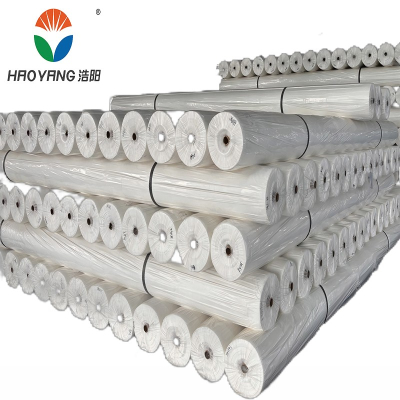
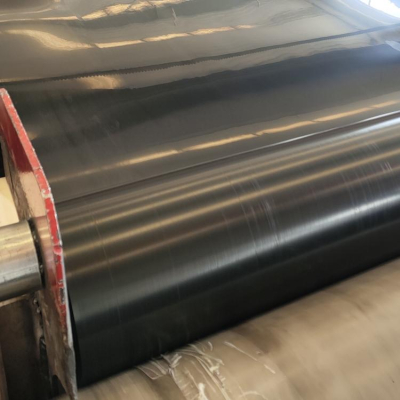
The Global HDPE Membrane Market 2026–2034: Data, Specifications, and Sourcing Strategy
Introduction: The Position of HDPE Membrane in Industrial Containment
Industrial containment projects share a common requirement: a barrier that does not fail. Not in five years, not in twenty-five. HDPE Membrane has become the standard answer to that requirement across waste management, mining, water storage, and aquaculture.
The material itself is not new. What has changed is the commercial environment surrounding it. Buyers now face fluctuating resin costs, regional supply imbalances, and a widening gap between certified products and commodity-grade alternatives. A Geomembrane Price quoted in isolation—without supporting test data, resin provenance, or compliance documentation—carries limited meaning.
This report examines the HDPE Membrane market through 2034 with emphasis on verifiable specifications, current pricing structures, and procurement practices that reduce project risk.
Market Size, Growth Rates, and Regional Consumption Patterns
 |  |  |
Market Valuation and Growth Projections
The global market for high-density polyethylene geomembranes was valued at approximately USD 1.89 billion in 2026. Industry forecasts place the figure at USD 2.51 billion by 2030, representing a compound annual growth rate of 7.4 percent. Broader analyses covering both HDPE and LLDPE geomembranes project expansion from USD 1.63 billion in 2025 to USD 2.87 billion by 2034, a CAGR of 6.5 percent.
These numbers reflect sustained capital allocation to infrastructure, mining, and environmental protection assets. HDPE Membrane is not a discretionary purchase. It is specified at the engineering stage and remains in the ground for decades.
What Is Driving Demand
Mining Capital Expenditure
The mining sector consumes large quantities of HDPE Liner for heap leach pads and tailings management. UK Office for National Statistics data from July 2025 recorded a £1.3 billion increase in mining and quarrying investment, a year-over-year rise of 31.9 percent. Similar trends appear in Australia, Chile, and West Africa. Higher mineral prices translate directly to expanded leach pad construction.
Regulatory Pressure in Waste Management
European Union member states and US EPA regions continue raising minimum liner specifications. Lower-grade materials that passed compliance reviews ten years ago no longer meet current permitting requirements. Owners upgrading existing facilities must install certified HDPE Membrane to maintain operating licenses.
Water Storage Expansion
UN Water estimates 2.4 billion people experience high water stress. Reservoir construction and canal rehabilitation programs in India, Morocco, and the southwestern United States specify HDPE Liner as the primary seepage control method. Dam lining alone accounted for over 300 million square meters of geomembrane deployment in 2026, with HDPE capturing approximately 70 percent of that volume.
Regional Supply and Specification Patterns
North America maintains the most mature quality assurance culture. Owners routinely require GRI-GM13 certification, third-party construction quality assurance, and electrical leak location surveys on high-risk cells. Geomembrane Price levels in this region reflect those compliance costs.
Asia-Pacific is the largest producing region and the fastest-growing consumption theater. Domestic manufacturers in China, India, and Thailand supply high volumes at competitive Geomembrane Price points. However, specification enforcement varies. Buyers exporting to projects outside the region must verify that exported material meets the destination country's standards, not merely the country of origin's.
Middle East and Africa present distinct technical demands. High ultraviolet index, saline soils, and diurnal temperature swings of 30 degrees Celsius or more require HDPE Membrane formulations with elevated carbon black content and oxidative induction time values exceeding 400 minutes. Off-specification materials degrade rapidly in these environments.
Material Specifications and Performance Verification
Composition of Certified HDPE Liner
Specification-grade HDPE Liner is produced from 97.5 percent virgin high-density polyethylene resin with approximately 2.5 percent additives. The additive package includes:
1.Carbon black for ultraviolet stabilization, typically 2.0 to 3.0 percent by weight
2.Antioxidants to suppress thermal oxidation during processing and service life
3.Process aids to ensure uniform sheet formation
Density is controlled between 0.94 and 0.96 grams per cubic centimeter. This density range distinguishes HDPE from LLDPE and provides the crystalline structure responsible for chemical resistance and stress crack performance.
Required Physical and Mechanical Properties
Industry standard specifications reference GRI-GM13 or ASTM D7465. Minimum property requirements include:
| Property | Minimum Requirement | Test Method |
| Thickness | Specified value ±5% | ASTM D5199 |
| Tensile strength at yield | 20 kN/m | ASTM D6693 |
| Elongation at break | 400% | ASTM D6693 |
| Tear resistance | 150 N | ASTM D1004 |
| Puncture resistance | 480 N (1.0 mm) | ASTM D4833 |
| Stress crack resistance | 300 hours | ASTM D5397 |
| Oxidative induction time | 100 minutes at 200°C | ASTM D3895 |
| Carbon black content | 2.0–3.0% | ASTM D4218 |
Material meeting these thresholds demonstrates 99.9 percent containment efficiency and, when properly installed and covered, service life estimates of 40 years or more.
Manufacturing Process and Quality Documentation
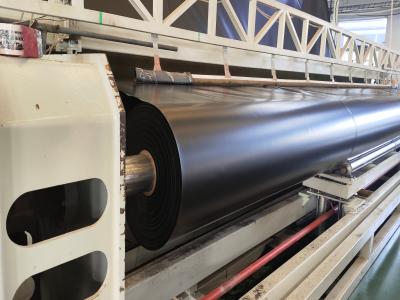
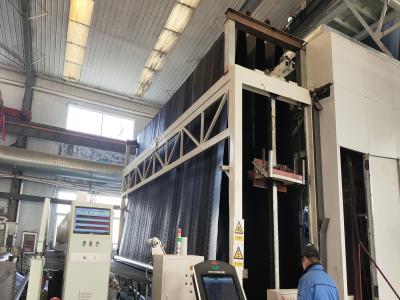
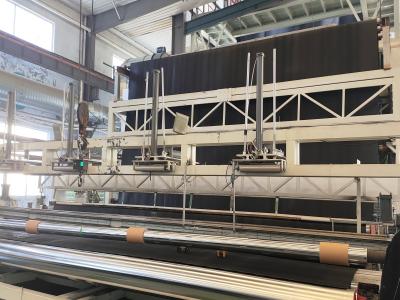
HDPE Membrane is manufactured through blown film extrusion or flat die extrusion. Both methods produce continuous sheet at controlled thickness. Blown film yields biaxially oriented material with balanced properties. Flat die extrusion produces sheet with machine-direction orientation and higher tensile strength in the direction of travel.
Traceability is the dividing line between manufacturers and traders.
Every production lot—typically 20,000 to 40,000 square meters—should be sampled and tested. Results are recorded on a Mill Test Report. This document lists measured values for each required property. Buyers should refuse shipments not accompanied by lot-specific Mill Test Reports. A certificate of analysis covering an entire production quarter is not adequate for critical containment applications.
Geomembrane Price Structure and Component Costs
Current Market Pricing Ranges
As of 2026, the Geomembrane Price for raw HDPE Membrane sheet, delivered to port of loading, falls within these ranges:
0.5 mm thickness: USD 0.50–1.00 per square meter
1.0 mm thickness: USD 0.80–1.50 per square meter
1.5 mm thickness: USD 1.20–2.00 per square meter
2.0 mm thickness: USD 1.80–3.50 per square meter
Fully installed system pricing—including geotextile underlayment, deployment, seaming, and construction quality assurance testing—ranges from USD 2.00 to 7.50 per square meter depending on site conditions and access.
Factors Influencing Geomembrane Price
Resin Selection
Virgin HDPE resin constitutes approximately 60 to 70 percent of raw material cost. Resin prices follow crude oil and natural gas feedstock markets. Certified HDPE Liner produced from virgin resin commands a 15 to 25 percent premium over blends containing recycled content. Stress crack resistance of virgin-based materials typically exceeds 500 hours; recycled-content blends often fall below 300 hours.
Thickness
Thickness accounts for 20 to 25 percent of price variation. A 2.0 mm sheet requires twice the polymer mass of a 1.0 mm sheet, though production efficiencies partially offset the differential.
Certification and Third-Party Verification
Materials carrying GRI-GM13 certification or meeting ASTM D7465 with supporting test data carry a 10 to 20 percent price premium over non-certified alternatives. Independent studies correlate this premium with a 95 percent reduction in field failure rates.
Order Quantity
Orders exceeding 50,000 square meters typically qualify for volume discounts of 15 to 25 percent. Buyers should request tiered pricing for multi-phase projects and consider consolidating multiple project requirements into single procurement events.
Application-Specific HDPE Liner Selection
Landfill and Waste Containment
Regulatory requirements dictate 1.5 mm minimum thickness for primary landfill liners in most developed jurisdictions. Textured surface finishes are required on slopes exceeding 10 percent to maintain interface friction with geotextile cushion layers.
Conductive HDPE Membrane—incorporating a thin conductive layer co-extruded into the sheet—is increasingly specified. This feature enables post-installation electrical leak location surveys without spreading conductive materials over the liner surface.
Mining Heap Leach and Tailings
Mining applications subject HDPE Liner to concentrated chemical solutions, elevated temperatures, and sustained tensile stress. Minimum specified thickness is 2.0 mm. Texturing is required for slopes exceeding 3H:1V.
Stress crack resistance is the critical property. The notched constant tensile load test per ASTM D5397 should demonstrate failure time exceeding 5,000 hours. Materials failing to meet this threshold are unsuitable for heap leach duty.
Water Storage and Conveyance
Potable water reservoirs require HDPE Liner certified to NSF/ANSI 61 for drinking water contact. Smooth sheet is typical, though textured products may be specified for lined canals with velocities exceeding 1.5 meters per second.
White or light-colored co-extruded top surfaces reduce maximum liner temperature by 10 to 15 degrees Celsius, decreasing thermal expansion movement and simplifying ballast design in exposed installations.
Aquaculture Ponds
Shrimp and fish farming operations specify 0.5 mm to 1.0 mm HDPE Membrane. Non-toxic formulations prevent bioaccumulation of heavy metals or plasticizers in harvested species. Producers report 20 percent average yield improvements following conversion from earthen ponds to lined systems.
Emerging Industry Trends
Conductive Geomembranes
The addition of a co-extruded conductive layer enables precise post-installation leak location without excavation. This technology is migrating from specialized applications to standard specifications in European and North American environmental projects.
Prefabricated Large Panels
Factory fabrication of large panel assemblies reduces field seaming volume by 30 to 50 percent. Installation schedules accelerate, and quality control risk shifts from remote project sites to controlled manufacturing environments. Particularly advantageous in regions with limited numbers of certified welding technicians.
Recycled Content Development
Several manufacturers have introduced HDPE Membrane incorporating post-industrial recycled resin while maintaining GRI-GM13 compliance. Adoption remains limited to non-critical applications, but material scientists project gradual penetration into primary containment as compounding technology improves.
Procurement Framework for Industrial Buyers
Step 1: Specification Development
Issue a Technical Data Sheet with every inquiry. Include thickness, surface finish, minimum physical properties, and applicable standards. Do not permit suppliers to bid against unspecified requirements.
Step 2: Supplier Qualification
Request current GRI-GM13 or ASTM D7465 certification. Obtain sample Mill Test Reports from recent production. Verify that test equipment is calibrated and testing frequency meets standard requirements.
Step 3: Price Evaluation
Compare quoted Geomembrane Price on delivered basis, including all logistics charges. Request breakdown of material cost, certification cost, and freight to enable like-for-like comparison.
Step 4: Inspection and Acceptance
For orders exceeding USD 250,000, engage third-party inspection during production. Verify thickness, carbon black dispersion, and mechanical properties before shipment. Retain independent laboratory samples.
Frequently Asked Questions
Q1: What lead time should I expect for HDPE Membrane orders?
Asian manufacturers typically quote 4 to 8 weeks from order confirmation to FOB port readiness. North American and European producers average 3 to 6 weeks. Current industry capacity utilization is approximately 80 percent, so expedited production may be available at premium pricing.
Q2: How can I confirm a quoted Geomembrane Price reflects certified material?
Request the supplier's GRI-GM13 certification document and a Mill Test Report from a production lot manufactured within the past six months. Compare reported values to standard requirements. Suppliers unable to provide these documents on request should be treated with caution.
Q3: What warranty applies to HDPE Liner products?
Twenty-year material warranty against manufacturing defects is standard from established producers. Installation workmanship carries a five-year warranty when installed by the manufacturer's certified contractor network. Extended terms may be available for large-scale projects with independent construction quality assurance.
Q4: Can HDPE Membrane be installed over existing asphalt or concrete liners?
Yes, provided the existing surface is stable, free of sharp protrusions, and compatible with the new liner. A non-woven geotextile cushion is typically installed between the existing surface and new HDPE Liner. Annual water savings from reduced seepage typically recover conversion costs within three to five years.
Q5: What is the practical difference between HDPE and LLDPE?
HDPE offers higher tensile strength, superior chemical resistance, and longer service life. LLDPE provides greater elongation at break—up to 800 percent—and better conformability to irregular subgrades. LLDPE is appropriate for irrigation ponds and decorative lakes on compressible soils. HDPE is required for landfills, mining, and hazardous waste.
Conclusion: Verified Specifications Over Apparent Savings
The global HDPE Membrane market offers abundant supply at competitive Geomembrane Price levels. The risk is not supply failure but specification failure—accepting material that appears similar to certified products but lacks the documented properties required for decades of service.
Professional buyers reduce this risk through three disciplined actions:
1.Write specifications, not shopping lists.
2.Verify conformance before shipment, not after delivery.
3.Select suppliers who provide test data, not only price quotations.
Procurement Resource: Our HDPE Membrane Technical Specification Template and Supplier Audit Checklist are available without charge. These documents reflect 20 years of field experience across landfill, mining, and water infrastructure projects.
Contact: Request lot-specific Mill Test Reports or schedule a specification review with our technical sales engineering team.