The Global Geomembrane Sheet Market 2026–2034: Technical Specifications and Strategic Procurement
Introduction: The Essential Role of Geomembrane Sheet in Modern Infrastructure
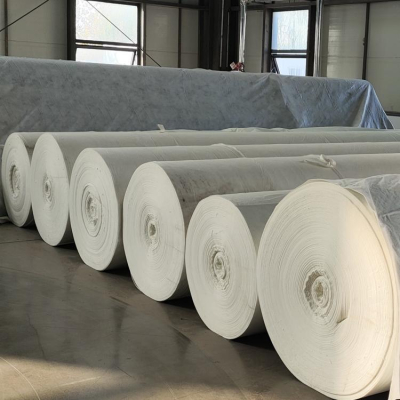
Industrial containment and waterproofing projects demand materials that perform predictably over decades. Geomembrane Sheet products have become the standard solution across waste management, water infrastructure, mining, and civil engineering applications worldwide. These synthetic polymer barriers provide reliable control of fluid migration, protecting soil and water resources from contamination while enabling efficient resource management .
The commercial environment for Geo Membrane Sheet procurement has grown increasingly complex. Raw material price fluctuations, regional supply variations, and evolving certification requirements mean buyers must evaluate more than the initial price quotation. Understanding technical specifications, manufacturing processes, and application-specific requirements is essential for successful project outcomes.
This report examines the Geomembrane Sheet market through 2034, providing data-driven analysis of market trends, technical standards, pricing structures, and procurement best practices for industrial buyers.
 |  |  |
Market Fundamentals: Size, Growth, and Regional Dynamics
Current Market Valuation and Growth Trajectory
The global geomembranes market was valued at USD 2.23 billion in 2025, with projections showing growth to USD 2.35 billion in 2026 and reaching USD 3.59 billion by 2034, representing a compound annual growth rate of 5.46 percent . Complementary analyses place the market at USD 3.31 billion in 2025 with a CAGR of 7.13 percent through 2032 . These figures confirm that Geomembrane Sheet products are fundamental components of global infrastructure investment.
Primary Demand Drivers
Environmental Protection Regulations
Government agencies worldwide have introduced stricter environmental regulations governing waste management, water containment, and landfills. Industries including mining, construction, and agriculture increasingly rely on Geomembrane Sheet systems to prevent contamination of natural resources. This regulatory pressure is driving significant demand, particularly in regions with stringent environmental laws .
Water Scarcity and Storage Infrastructure
Water stress affects 2.4 billion people globally, accelerating reservoir construction and canal rehabilitation programs. Geomembrane Waterproofing applications in water storage projects provide critical seepage control, with HDPE geomembranes capturing approximately 70 percent of this segment due to their optimal balance of cost and chemical resilience.
Mining Sector Expansion
The mining industry remains a primary consumer of Geo Membrane Sheet systems for heap leach pads and tailings storage facilities. Capital expenditure in mining has increased substantially, directly correlating with demand for high-specification containment materials.
Regional Market Intelligence
North America holds approximately 35 percent of the global market share, supported by mature construction quality assurance cultures and rigorous EPA enforcement . Owners routinely require third-party certification and electrical leak location surveys on high-risk cells.
Asia-Pacific accounts for 30 percent of the market and is the fastest-growing theater, driven by China, India, and Southeast Asian nations executing massive irrigation, hydropower, and waste management programs . Domestic manufacturing capacity in this region often enables competitive pricing, though specification enforcement varies.
Europe represents 25 percent of the global market, with policy frameworks emphasizing circular economy principles and water conservation fueling investments in recycled and sustainable Geomembrane Sheet options .
Middle East and Africa, with 10 percent market share, present distinct technical demands: high ultraviolet index, saline groundwater, and extreme temperature differentials require formulations with enhanced UV stabilization and oxidative resistance .
Technical Architecture: What Defines a Specification-Grade Geomembrane Sheet
Material Composition and Polymer Types
Geomembrane Sheet products are manufactured from various polymer types, each offering distinct performance characteristics for different applications.
High-Density Polyethylene (HDPE) dominates the market with approximately 40 percent share . HDPE geomembranes are recognized for superior chemical resistance, robustness, and durability, making them ideal for harsh environmental conditions. Density is controlled between 0.94 and 0.96 grams per cubic centimeter, providing the crystalline structure responsible for chemical resistance and stress crack performance. HDPE is particularly popular in landfill liners, mining operations, and wastewater treatment systems .
Linear Low-Density Polyethylene (LLDPE) accounts for approximately 25 percent of the market . LLDPE geomembranes offer enhanced flexibility and high tensile strength, making them ideal for applications requiring high elongation and puncture resistance. Their ability to stretch under stress without cracking makes them preferred for lining large containment structures and applications with potential settlement.
Polyvinyl Chloride (PVC) holds approximately 20 percent market share . PVC geomembranes offer good flexibility and ease of installation, making them popular in construction projects such as roofing systems, reservoirs, and retaining walls where Geomembrane Waterproofing and durability are critical.
Low-Density Polyethylene (LDPE) represents approximately 15 percent of the market, primarily used for cost-sensitive applications where flexibility and ease of installation outweigh extreme durability requirements .
Required Physical and Mechanical Properties
Industry standard specifications for Geo Membrane Sheet products reference GRI-GM13, ASTM D7465, or equivalent international standards. Critical performance parameters include:
| Property | Typical Requirement | Test Method |
| Thickness | 0.5 mm – 3.0 mm (±5%) | ASTM D5199 |
| Density | ≥ 0.94 g/cm³ (HDPE) | ASTM D1505 |
| Tensile strength at yield | 15–20 kN/m minimum | ASTM D6693 |
| Elongation at break | 400–700% | ASTM D6693 |
| Tear resistance | 150–500 N | ASTM D1004 |
| Puncture resistance | 200–1,500 N | ASTM D4833 |
| Stress crack resistance | 300–500 hours minimum | ASTM D5397 |
| Carbon black content | 2.0–3.0% | ASTM D4218 |
| Permeability coefficient | ≤ 1.0 × 10⁻¹³ m/s | ASTM D5887 |
Material meeting these thresholds demonstrates 99.9 percent containment efficiency and service life estimates of 25 to 50 years when properly installed and covered .
Manufacturing Process and Quality Documentation
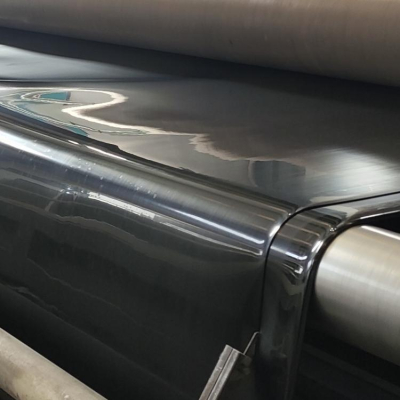
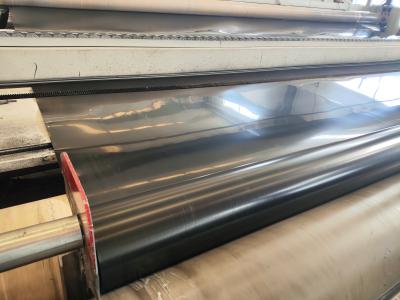
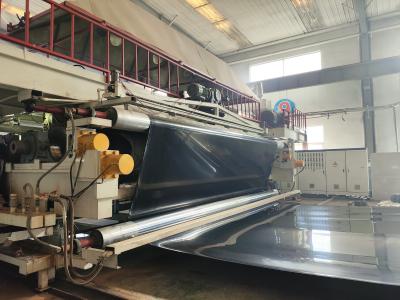
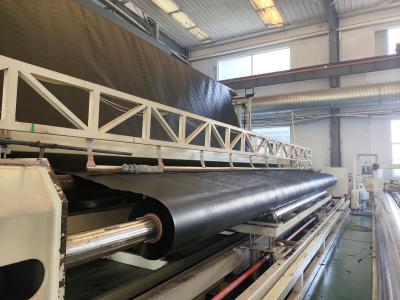
Geomembrane Sheet is manufactured through blown film extrusion or flat die extrusion. Both methods produce continuous sheet at controlled thickness with specific characteristics .
The production workflow follows standardized engineering procedures:
1.Raw Material Dosing: Virgin HDPE or LLDPE resin combined with antioxidant and carbon black masterbatch
2.Drying and Conditioning: Hopper drying to maintain moisture below technical thresholds
3.Extrusion: Multi-zone heating system controlled between 180–220°C
4.Sheet Forming: Precision calendering for thickness control
5.Surface Texturing: Optional embossing rollers for friction optimization
6.Cooling: Water-cooled conveyor stabilization
7.Inline Monitoring: Laser thickness gauges and spark testing equipment
8.Final Winding: Tension-controlled automatic roll systems
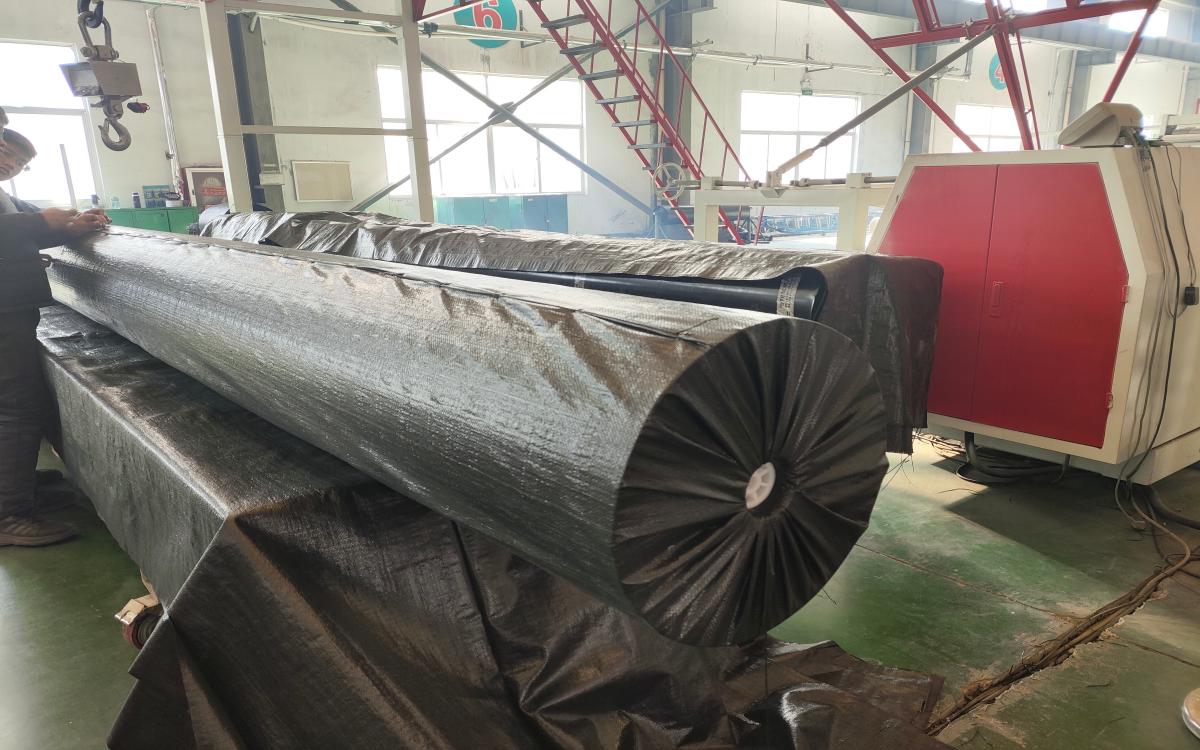
Traceability separates manufacturers from traders. Every production lot should be sampled and tested, with results recorded on a Mill Test Report documenting measured values for each required property. Buyers should request lot-specific documentation and verify that test equipment calibration and testing frequency meet standard requirements.
Geomembrane Waterproofing Applications and Selection Criteria
Waste Management and Environmental Protection
Landfill cells and hazardous waste containment facilities demand 1.5 mm to 2.0 mm textured Geomembrane Sheet to maximize interface friction with geotextile or clay components. Conductive variants enabling Electrical Leak Location Surveys are increasingly specified in North America and Europe . This segment represents approximately 32 percent of global Geo Membrane Sheet demand .
Mining Heap Leach and Tailings
Mining applications subject Geomembrane Sheet to concentrated chemical solutions, elevated temperatures, and sustained tensile stress. Minimum specified thickness is 2.0 mm, with texturing required for slopes exceeding 3H:1V. Stress crack resistance is the critical property, with notched constant tensile load testing per ASTM D5397 demonstrating failure time exceeding 5,000 hours for heap leach duty. Mining accounts for approximately 20 percent of market volume .
Water Management and Hydraulic Engineering
Potable water reservoirs require Geomembrane Sheet certified to NSF/ANSI 61 for drinking water contact. Irrigation reservoirs, canal linings, and decorative lakes typically utilize 1.0 mm to 1.5 mm smooth HDPE or LLDPE geomembranes. White or light-colored co-extruded top surfaces reduce maximum liner temperature by 10 to 15 degrees Celsius, decreasing thermal expansion movement in exposed installations. Water management represents approximately 25 percent of global demand .
Construction and Civil Engineering
Foundation waterproofing, tunnel liners, and underground structures rely on Geomembrane Waterproofing systems to control groundwater infiltration. Typical specifications range from 1.0 mm to 2.0 mm depending on hydrostatic pressure and structural requirements. Textured sheet is often specified for vertical applications to improve interface friction with concrete or shotcrete .
Aquaculture and Agriculture
Fish and shrimp farming operations specify 0.5 mm to 1.0 mm Geomembrane Sheet with non-toxic formulations to prevent bioaccumulation in harvested species. Agricultural reservoirs and irrigation ponds utilize HDPE geomembranes that conserve up to 85 percent of water compared to unlined earthen ponds . Producers report average yield improvements of 20 percent following conversion to lined systems .
Emerging Industry Trends
Conductive Geomembranes and Leak Detection
The integration of conductive layers within Geo Membrane Sheet structures enables precise post-installation leak location without excavation. This technology is migrating from specialized applications to standard specifications in high-risk environmental projects across Europe and North America .
Sustainable and Recycled Content Development
Manufacturers are developing Geomembrane Sheet incorporating post-industrial recycled resin while maintaining compliance with GRI-GM13 and ASTM standards. Adoption is increasing in non-critical applications, with material scientists projecting gradual penetration into primary containment as compounding technology improves .
Prefabricated Large Panels
Factory fabrication of large panel assemblies reduces field seaming volume by 30 to 50 percent, accelerating installation schedules and shifting quality control risk from remote project sites to controlled manufacturing environments. This approach is particularly advantageous in regions with limited numbers of certified welding technicians .
Digital Integration and Monitoring
The convergence of digital monitoring technologies with Geomembrane Waterproofing systems enables real-time integrity verification. IoT sensors embedded in or beneath the liner facilitate proactive maintenance and early detection of breaches, reducing liability for project owners .
Procurement Framework for Industrial Buyers
Specification Development
Issue a comprehensive Technical Data Sheet with every inquiry. Include:
1.Required thickness and tolerance
2.Polymer type (HDPE, LLDPE, PVC)
3.Surface finish (smooth, textured, conductive)
4.Minimum physical properties referencing ASTM or GRI standards
5.Certification requirements (NSF 61, GRI-GM13)
6.Roll dimensions and packaging specifications
Do not permit suppliers to bid against unspecified requirements.
Supplier Qualification
Request current certification documents and sample Mill Test Reports from recent production matching your specification. Verify that:
1.Test equipment calibration is current
2.Testing frequency meets standard requirements
3.Reported values meet or exceed specified minima
4.3Material traceability systems are documented
Suppliers unable to provide these documents on request should be treated with caution.
Price Evaluation
Compare quoted Geomembrane Sheet pricing on a delivered basis, including all logistics charges. Request breakdown of:
1.Material cost by thickness and polymer type
2.Certification and testing costs
3.Freight and logistics to project site
4.Volume discount tiers for multi-phase projects
Inspection and Acceptance
For orders exceeding significant value thresholds, engage third-party inspection during production. Verify:
1.Thickness uniformity across sheet width
2.Carbon black dispersion
3.Mechanical properties through independent laboratory testing
4.Proper packaging for transport and storage
Retain independent laboratory samples from each production lot for reference.
Frequently Asked Questions
Q1: What is the difference between HDPE and LLDPE Geomembrane Sheet?
HDPE offers higher tensile strength, superior chemical resistance, and longer service life—optimal for landfills, mining, and hazardous waste applications where chemical exposure is severe. LLDPE provides greater elongation at break (up to 700 percent) and better conformability to irregular subgrades, making it appropriate for irrigation ponds, decorative lakes, and applications on compressible soils where differential settlement may occur .
Q2: What thickness of Geomembrane Sheet do I need for my project?
Thickness selection depends on application and site conditions:
0.5 mm to 1.0 mm: Aquaculture ponds, decorative lakes, low-load secondary containment
1.0 mm to 1.5 mm: Irrigation reservoirs, canal linings, general waterproofing
1.5 mm to 2.0 mm: Landfill cells, hazardous waste containment
2.0 mm and above: Heap leach pads, high-head mining applications, severe chemical exposure
Q3: How do I verify that a quoted Geomembrane Sheet meets specifications?
Request the supplier's certification documentation and a Mill Test Report from a production lot matching your specification. Compare reported values for tensile strength, elongation, puncture resistance, carbon black content, and other specified properties against ASTM or GRI standard requirements. For critical projects, engage third-party laboratory testing of samples taken from delivered rolls .
Q4: What is the typical service life of Geomembrane Sheet?
Properly manufactured and installed Geo Membrane Sheet products demonstrate service life of 25 to 50 years depending on exposure conditions. HDPE geomembranes in buried applications can exceed 50 years due to the stabilizing effect of carbon black and antioxidant packages. Exposed installations have shorter service life—typically 10 to 20 years—depending on UV stabilization and local climate conditions .
Q5: Can Geomembrane Sheet be installed over existing concrete or clay liners?
Yes, Geomembrane Waterproofing systems are frequently specified as retrofit overlays for deteriorated concrete or desiccated clay barriers. Subgrade preparation must include removal of sharp protrusions, installation of a non-woven geotextile cushion, and verification of stable foundation conditions. Annual cost savings from reduced seepage typically recover retrofit investment within three to five years .
Conclusion: Verified Specifications Over Apparent Savings
The global Geomembrane Sheet market offers abundant supply at competitive price levels. The risk for buyers is not supply failure but specification failure—accepting material that appears similar to certified products but lacks the documented properties required for decades of service.
Professional buyers reduce this risk through three disciplined actions:
1.Write specifications referencing recognized international standards, not shopping lists of desired thickness
2.Verify conformance through independent testing and documentation before shipment
3.Select suppliers who provide comprehensive test data and material traceability, not only price quotations
The most cost-effective Geo Membrane Sheet is not the one with the lowest initial price, but the one that delivers verified performance throughout the project's design life.
Procurement Resource: Our Geomembrane Sheet Technical Specification Template and Supplier Audit Checklist are available without charge. These documents reflect field experience across landfill, mining, water infrastructure, and construction projects worldwide.
Contact our technical sales engineering team for a specification review or to request lot-specific Mill Test Reports for your current project inquiry.