The Global Black Pond Liner Market 2026–2035: Specifications and Procurement Guide
Introduction: Black Pond Liner in Water Containment
Water containment projects across agricultural and commercial sectors share a basic requirement: a barrier that prevents seepage while withstanding years of environmental exposure. Black Pond Liner products have become the standard solution for irrigation reservoirs, aquaculture facilities, and commercial water features. The black coloration serves specific purposes—it blocks light that would otherwise promote algal growth and contains carbon black for ultraviolet stabilization.
The procurement environment for pond liner systems has grown more complex. Raw material price movements, regional supply differences, and changing certification requirements mean buyers must evaluate more than the initial price quotation. Understanding technical specifications, manufacturing processes, and application requirements is essential for successful project outcomes.
This report examines the Black Pond Liner market through 2035, providing analysis of market trends, technical standards, and procurement practices for agricultural, aquacultural, and commercial buyers.
 |  |  |
Market Size, Growth, and Regional Patterns
Current Market Valuation
The global pond liner market was valued at USD 2.67 billion in 2026 and is projected to reach USD 5.26 billion by 2035, representing a compound annual growth rate of 7.84 percent during the forecast period. This growth reflects continued investment in water storage infrastructure, aquaculture expansion, and commercial landscaping projects.
Broader analyses of the geomembranes market—which includes HDPE Liner Sheet products—show expansion from USD 2.23 billion in 2025 to USD 3.59 billion by 2034, aCAGR of 5.46 percent. These figures confirm that containment lining systems are fundamental to global infrastructure investment.
Factors Driving Demand
Water Storage Requirements
Water stress affects billions globally, accelerating reservoir construction and canal rehabilitation programs. Black Pond Liner systems provide seepage control in agricultural irrigation reservoirs, commercial water storage facilities, and stormwater management applications. The ability to conserve up to 85 percent of water compared to unlined earthen basins makes lined systems increasingly attractive in water-stressed regions.
Aquaculture Expansion
Global seafood demand continues rising, driving expansion of fish and shrimp farming operations. Aquaculture ponds require reliable HDPE Liner Sheet systems that prevent seepage, maintain water quality, and improve harvest yields. Producers report average yield improvements of 20 percent following conversion from earthen ponds to lined systems.
Commercial Landscaping Development
Commercial landscaping projects have emerged as a significant market driver. Golf courses, resort developments, and public parks frequently incorporate water features requiring dependable liner systems. This segment favors materials that balance installation ease with long-term durability.
Environmental Compliance
Environmental regulations have spurred development of containment systems designed for regulatory adherence. Black Pond Liner plays a role in guaranteeing effective water retention and acting as a barrier against contamination, supporting initiatives dedicated to resource protection.
Regional Market Characteristics
North America holds approximately 35 percent of the global geomembranes market share, supported by established quality assurance practices and environmental enforcement. The region's position is fueled by agricultural water management requirements and commercial development activity.
Asia-Pacific accounts for 30 percent of the market and is the fastest-growing region, driven by China, India, and Southeast Asian nations executing large-scale irrigation, aquaculture, and infrastructure programs. Domestic manufacturing capacity in this region often enables competitive pricing.
Europe represents 25 percent of the global market, with policy frameworks emphasizing water conservation and sustainable practices fueling investments in liner solutions for agricultural and environmental applications.
Middle East and Africa, with 10 percent market share, present distinct technical demands: high ultraviolet exposure, saline groundwater, and extreme temperature differentials require formulations with enhanced UV stabilization and oxidative resistance.
Technical Specifications for Black Pond Liner
Material Composition
Black Pond Liner products are manufactured from various polymer types, each offering different performance characteristics. The black coloration comes from carbon black content, typically 2.0 to 3.0 percent by weight, which provides essential UV stabilization.
High-Density Polyethylene (HDPE) dominates the geomembrane market with approximately 40 percent share. HDPE liners offer superior chemical resistance, robustness, and durability, making them suitable for demanding conditions. Density is controlled between 0.94 and 0.96 grams per cubic centimeter, providing the crystalline structure responsible for chemical resistance and stress crack performance. HDPE Liner Sheet is widely used in agricultural reservoirs, aquaculture ponds, and commercial water features.
Linear Low-Density Polyethylene (LLDPE) accounts for approximately 25 percent of the market. LLDPE geomembranes offer enhanced flexibility and tensile strength, making them suitable for applications requiring elongation and puncture resistance. Their ability to stretch under stress makes them preferred for lining large containment structures and applications with potential settlement.
Polyvinyl Chloride (PVC) holds approximately 20 percent market share. PVC geomembranes offer flexibility and ease of installation, making them common in decorative pond projects and smaller water features where handling ease is prioritized.
Low-Density Polyethylene (LDPE) represents approximately 15 percent of the market, primarily used for cost-sensitive applications where flexibility outweighs extreme durability requirements.
Physical and Mechanical Properties
Industry standard specifications for Black Pond Liner products reference GRI-GM13, ASTM D7465, or equivalent international standards. Performance parameters include:
| Property | Typical Requirement | Test Method |
| Thickness | 0.5 mm – 2.0 mm (±5%) | ASTM D5199 |
| Density | ≥ 0.94 g/cm³ (HDPE) | ASTM D1505 |
| Tensile strength at yield | 15–20 kN/m minimum | ASTM D6693 |
| Elongation at break | 400–700% | ASTM D6693 |
| Tear resistance | 150–500 N | ASTM D1004 |
| Puncture resistance | 200–1,500 N | ASTM D4833 |
| Carbon black content | 2.0–3.0% | ASTM D4218 |
| Permeability | ≤ 1.0 × 10⁻¹³ m/s | ASTM D5887 |
Material meeting these thresholds demonstrates 99.9 percent containment efficiency and service life estimates of 25 to 50 years when properly installed and covered.
Manufacturing Process
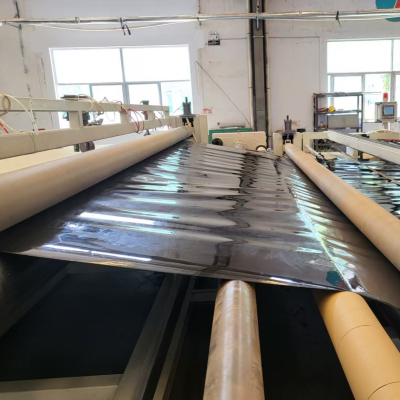
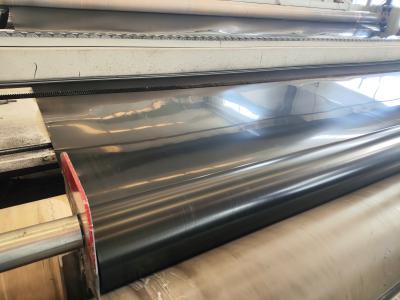
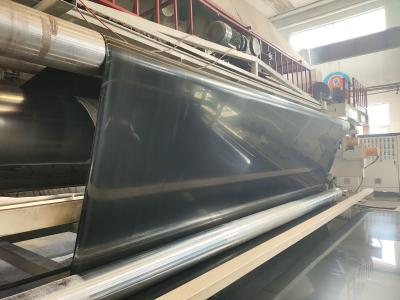
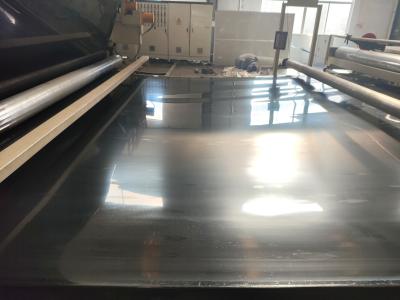
Black Pond Liner is manufactured through blown film extrusion or flat die extrusion. The production workflow follows standardized procedures:
1.Raw material dosing with virgin HDPE or LLDPE resin combined with carbon black masterbatch and antioxidants
2.Drying and conditioning to maintain moisture below technical thresholds
3.Extrusion through multi-zone heating systems controlled between 180–220°C
4.Sheet forming with precision calendering for thickness control
5.Cooling on water-cooled conveyors for stabilization
6.Inline monitoring with laser thickness gauges and spark testing equipment
7.Final winding on tension-controlled automatic roll systems
Advanced manufacturing technologies continue to transform production capabilities. Extrusion coating involves applying a thin polymer layer onto base materials, resulting in liners with increased strength and flexibility. Calendaring enhances surface finish, providing smooth and uniform texture that contributes to durability.
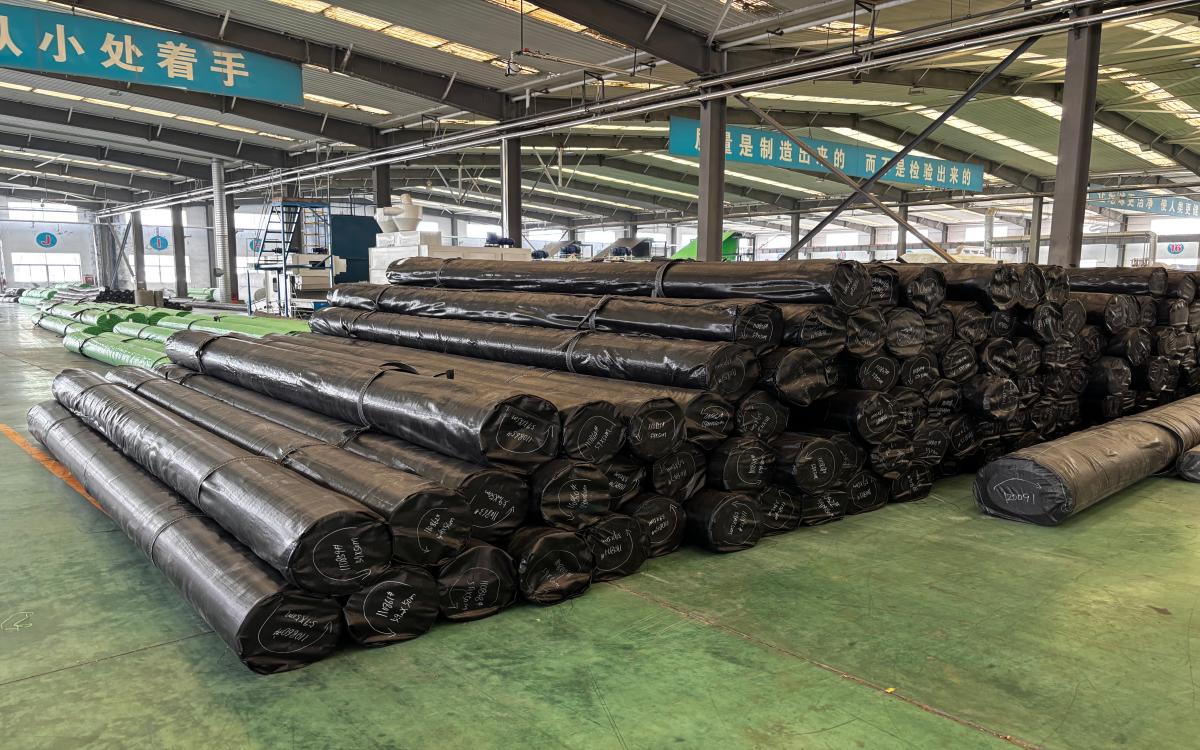
Traceability is essential. Every production lot should be sampled and tested, with results recorded on a Mill Test Report documenting measured values for each required property. Buyers should request lot-specific documentation and verify that test equipment calibration meets standard requirements.
Application Case Studies
Daniel Johnson Dam Rehabilitation, Canada
The Daniel Johnson Dam in Quebec, the largest multiple-arch buttress dam in the world, demonstrates a unique application of geomembrane technology for concrete structure preservation. Completed in 1968, the dam stretches 1.3 kilometers with a maximum height of 214 meters. By the mid-2000s, leakage marks appeared on downstream buttresses along with concrete degradation from freeze-thaw cycles along vertical joints .
Previous joint sealing repairs failed to provide long-term performance. In 2008, engineers selected a flexible waterproofing system using 2.5 mm PVC geomembrane sheet laminated to non-woven geotextile. The installation covered vertical joints on ten buttresses, totaling approximately 430 linear meters of geomembrane coverage. Workers completed installation in 30 working days during fall 2011 .
The project faced extreme challenges: workers needed safe access over parapet walls into suspended staging, and buttress 7 required specialized approaches due to its diagonal configuration descending more than 135 meters. The geomembrane system was certified for water pressures up to 240 meters of head. This application demonstrates how Geomembrane Sheet technology extends infrastructure life in demanding environments .
Chemical Containment Project, West Bengal, India
A chemical manufacturing facility in West Bengal required secure containment for hazardous by-products. The facility handles acids, alkalis, solvents, and industrial effluents where even minor leakage could contaminate groundwater. The Central Pollution Control Board estimates that 62 percent of industrial groundwater contamination cases in India originate from improper chemical waste storage .
Ocean Non Wovens supplied HDPE Liner Sheet specifically formulated for chemical resistance. Before installation, laboratory-scale immersion tests confirmed compatibility with the specific chemical concentrations present on site—a critical step many installers overlook. The liner demonstrated chemical resistance to aggressive compounds while maintaining dimensional stability through West Bengal's seasonal temperature fluctuations .
Installation followed strict protocols: surface preparation removed all sharp debris, liner deployment avoided dragging stresses, and fusion welding created leak-proof seams verified through air channel testing. The project achieved service life projections exceeding 25 years with minimal maintenance requirements. This case illustrates why certified HDPE Liner Sheet with documented chemical compatibility is essential for industrial applications .
Wastewater Treatment Basins, Indonesia
Indonesia's palm oil production generates significant wastewater requiring treatment before environmental release. A palm oil producer needed reliable containment basins for sewage treatment. After evaluating multiple suppliers, the client selected 1.5 mm black HDPE geomembrane totaling 36,000 square meters across two 40-foot container shipments .
The purchasing decision came down to material verification. When the client received samples, they compared surface smoothness and tensile properties against alternatives. The selected material exhibited superior carbon black dispersion and mechanical strength. BPM supplied Black Pond Liner manufactured from virgin raw materials with test results exceeding GM13 standards .
Installation followed documented procedures: panels extended from bottom to high positions with 1.5 percent slack for thermal movement, longitudinal joints staggered by more than one meter, and overlapping widths maintained at minimum 10 centimeters. The completed basins now handle palm oil mill effluent with high chemical oxygen demand and biological oxygen demand loads. This project demonstrates why physical sample verification matters in Geomembrane Sheet procurement .
Shrimp Farm Conversion, Philippines
A shrimp farmer in the Philippines operated natural earthen ponds but faced persistent disease problems. Sick shrimp increased operational costs and reduced harvest predictability. The farmer agreed to trial 0.75 mm HDPE geomembrane based on sample testing and third-party certification .
The conversion required careful installation coordination. The farmer lacked previous liner experience, so the supplier provided remote guidance throughout deployment. Laying procedures followed slope-first sequences with panels oriented parallel to maximum slope lines. The liner extended from bottom to high positions without overtightening, accommodating potential settlement .
Results showed measurable improvements: water conservation costs decreased, oxygen content stabilized, and cleaning cycles shortened. Disease incidence dropped significantly, and the breeding cycle became more predictable. The project confirmed that Black Pond Liner systems in aquaculture deliver tangible operational benefits beyond simple seepage control .
Educational Pond Renovation, Germany
The Technical University of Braunschweig maintains an institute garden with a pond and stream system for teaching and research. By 2010, the pond had accumulated debris, and the black pond liner became visible along edges. Students undertook renovation as part of their project-based learning .
The stream required significant intervention. Flow testing revealed insufficient slope, and the existing liner was oversized for the channel. Initial attempts to connect a masonry spring container to the liner failed—adhesive bonds could not achieve impermeable seals. Students abandoned that approach, removed the container, regraded the slope, and relaid the liner properly .
The stream bed received stones of varying sizes for stabilization, with marsh plants placed between rocks for naturalization. A buried plastic pipe protected the water supply hose from winter frost. This modest project illustrates fundamental truths about Geomembrane Sheet installation: adhesive connections to structures require careful engineering, slope gradients must be verified before final installation, and proper anchoring prevents liner movement .
Sustainable Pond Liner Recycling, Vietnam
Soc Trang Province in Vietnam's Mekong Delta produces substantial shrimp harvests using lined ponds. Used Black Pond Liner accumulation created environmental challenges until a novel initiative launched in October 2024. Evergreen Social Ventures, with sponsorship from Dow Vietnam, established collection and recycling systems targeting Tran De, My Xuyen, and Vinh Chau districts .
The project runs from August 2024 through August 2025, creating strategic collection points and storage infrastructure. Used pond liners are converted into recycled plastic pellets for new applications. Local farmers receive training on proper liner disposal, reducing production costs while improving environmental outcomes. The initiative aligns with Vietnam's national sustainable development strategy and demonstrates how public-private partnerships address plastic waste from aquaculture .
This represents the emerging circular economy for Geomembrane Sheet materials. Rather than disposal, used liners become feedstock for new products, reducing virgin resin demand while solving waste accumulation problems. For buyers, this trend may eventually influence material pricing and end-of-life responsibility considerations .
Application-Specific Selection
Agricultural Irrigation Reservoirs
Agricultural applications represent a significant market for Black Pond Liner. Irrigation reservoirs require 1.0 mm to 1.5 mm smooth HDPE geomembranes that provide reliable water retention while withstanding UV exposure and agricultural chemical contact. The black coloration prevents light penetration that would otherwise promote algal growth, maintaining water quality for irrigation.
Aquaculture Ponds
Fish and shrimp farming operations specify 0.5 mm to 1.0 mm HDPE Liner Sheet with non-toxic formulations to prevent bioaccumulation in harvested species. The smooth surface facilitates cleaning and harvesting while preventing pathogen harborage common in earthen ponds. Producers report average yield improvements following conversion to lined systems.
Commercial Water Features
Commercial landscaping projects utilize 0.5 mm to 1.0 mm Black Pond Liner for water features in resorts, golf courses, and public parks. EPDM rubber and reinforced polyethylene are preferred for natural-style ponds due to their flexibility and conformability to irregular shapes. Installation precision is critical, employing thermal fusion or specialized adhesives to guarantee seam integrity.
Industrial Containment
Chemical and wastewater facilities demand robust liner systems that withstand aggressive fluids and potential contaminant exposure. Geomembrane Sheet products with documented chemical resistance are essential. Pre-installation compatibility testing, as demonstrated in the West Bengal project, should be standard practice for high-risk applications .
Installation Steps
Proper installation is critical to maximizing Black Pond Liner performance. Key steps:
1.Subgrade preparation removing sharp debris, rocks, and roots, with compaction and smoothing
2.Cushion layer installation with non-woven geotextile underlayment for puncture protection
3.Panel deployment avoiding dragging over rough surfaces and allowing for thermal movement
4.Seaming execution using qualified methods appropriate to the material
5.Seam testing using non-destructive methods for every linear meter
6.Ballasting for exposed installations or prompt soil cover for buried applications
Current Industry Developments
Sustainable Material Development
Manufacturers are developing Black Pond Liner incorporating post-industrial recycled resin while maintaining compliance with GRI-GM13 and ASTM standards. The Vietnam recycling initiative demonstrates growing interest in end-of-life liner recovery and processing .
Conductive Geomembranes for Leak Detection
The integration of conductive layers within HDPE Liner Sheet structures enables post-installation leak location without excavation. This technology is migrating from landfill applications to large-scale pond and reservoir projects where leakage prevention is critical.
Prefabricated Large Panels
Factory fabrication of large panel assemblies reduces field seaming volume by 30 to 50 percent, accelerating installation schedules and shifting quality control risk from remote project sites to controlled manufacturing environments. This approach is particularly advantageous for large agricultural reservoirs and aquaculture facilities.
Advanced Additive Technologies
Innovations in polymer stabilization, including enhanced antioxidant packages and UV stabilizers, are extending service life predictions for exposed Geomembrane Sheet applications. These developments are valuable in high-UV regions such as the Middle East, Australia, and the southwestern United States.
Procurement Framework
Specification Development
Issue a comprehensive technical data sheet with every inquiry. Include:
1.Required thickness and tolerance
2.Polymer type
3.Surface finish
4.Carbon black content for UV stabilization
5.Minimum physical properties referencing standards
6.Roll dimensions and packaging specifications
Do not permit suppliers to bid against unspecified requirements.
Supplier Qualification
Request current certification documents and sample Mill Test Reports from recent production matching your specification. Verify that test equipment calibration is current, testing frequency meets standard requirements, reported values meet specified minima, and material traceability systems are documented. Suppliers unable to provide these documents on request should be treated with caution.
Price Evaluation
Compare quoted pricing on a delivered basis, including all logistics charges. Request breakdown of material cost by thickness and polymer type, certification and testing costs, freight to project site, and volume discount tiers for multi-phase projects.
Sample Verification
Request physical samples before large orders. Compare surface finish, flexibility, and carbon black dispersion against certified standards. The Indonesia wastewater project demonstrated why physical verification matters—samples revealed differences in quality that specifications alone could not capture .
Inspection and Acceptance
For orders exceeding significant value thresholds, engage third-party inspection during production. Verify thickness uniformity across sheet width, carbon black dispersion, mechanical properties through independent laboratory testing, and proper packaging for transport. Retain independent laboratory samples from each production lot for reference.
Frequently Asked Questions
Q1:What thickness of Black Pond Liner do I need?
Thickness selection depends on application and site conditions:
0.5 mm to 1.0 mm: Decorative ponds, small aquaculture, light-duty landscaping
1.0 mm to 1.5 mm: Agricultural reservoirs, larger aquaculture, general water storage
1.5 mm to 2.0 mm: Industrial containment, chemical exposure, high-exposure applications
For most commercial pond applications, 1.0 mm HDPE Liner Sheet provides an optimal balance of durability and cost.
Q2: What is the difference between HDPE and EPDM for pond liners?
HDPE offers higher tensile strength, superior chemical resistance, and longer service life. This makes it optimal for large agricultural reservoirs and aquaculture facilities where durability is the primary concern. EPDM rubber provides greater flexibility and conformability to irregular shapes, making it preferred for natural-style garden ponds with curves and shelves. Both materials are available in black with UV stabilization.
Q3: How long does Black Pond Liner last?
Properly manufactured and installed Black Pond Liner products demonstrate service life of 25 to 50 years depending on exposure conditions. The Daniel Johnson Dam installation, while PVC rather than HDPE, demonstrates how geomembrane systems preserve infrastructure for decades . HDPE geomembranes in buried or covered applications can exceed 50 years due to the stabilizing effect of carbon black and antioxidant packages. Exposed installations have shorter service life depending on UV stabilization and local climate.
Q4: Can Black Pond Liner be installed over existing clay or concrete liners?
Yes, Geomembrane Sheet products are frequently specified as retrofit overlays for deteriorated concrete or desiccated clay barriers. The Daniel Johnson Dam project successfully installed geomembrane over existing concrete buttresses to address freeze-thaw degradation . Subgrade preparation must include removal of sharp protrusions, installation of a non-woven geotextile cushion, and verification of stable foundation conditions. Annual water savings from reduced seepage typically recover retrofit investment within three to five years.
Q5: How do I verify liner quality before purchase?
Request the supplier's certification documentation and a Mill Test Report from a production lot matching your specification. Compare reported values for tensile strength, elongation, puncture resistance, carbon black content, and other specified properties against standard requirements. For critical projects, request physical samples for comparison, as demonstrated in the Indonesia wastewater project where sample evaluation revealed quality differences . Engage third-party laboratory testing of samples from delivered rolls for high-value applications.
Conclusion: Specifications Over Price Alone
The global Black Pond Liner market offers abundant supply at competitive price levels. The risk for buyers is accepting material that appears similar to certified products but lacks the documented properties required for decades of service. Real-world projects demonstrate that success depends on verified performance: the Daniel Johnson Dam rehabilitation required geomembrane certified for high water pressure ; the West Bengal chemical facility needed documented chemical compatibility ; the Indonesia wastewater project confirmed quality through sample evaluation .
Professional buyers reduce risk through three actions:
1.Write specifications referencing recognized international standards rather than shopping lists of desired thickness
2.Verify conformance through independent testing and documentation before shipment rather than after delivery
3.Select suppliers who provide comprehensive test data and material traceability rather than only price quotations
The most cost-effective HDPE Liner Sheet is not the one with the lowest initial price, but the one that delivers verified performance throughout the project's design life.
Procurement Resource: Our Black Pond Liner Technical Specification Template and Supplier Audit Checklist are available without charge. These documents reflect field experience across agricultural, aquacultural, industrial, and commercial projects worldwide.
Contact our technical sales engineering team for a specification review or to request lot-specific Mill Test Reports for your current project inquiry.