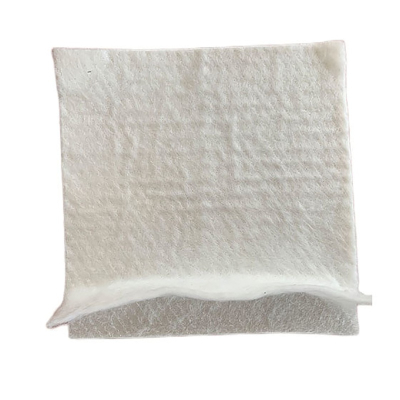
Geomembrane Sheet: B2B Procurement Guide to HDPE Tech & Global Market Dynamics
Introduction: Geomembrane Sheet’s Indispensable Role in Industrial Containment
For B2B procurement teams specializing in civil engineering, environmental protection, and industrial containment, Geomembrane Sheet has become an irreplaceable cornerstone material—boasting fluid barrier performance that outperforms traditional liners. As global infrastructure development speeds up and environmental compliance evolves from a voluntary effort to a mandatory requirement, international buyers are leaning more toward high-performance options, with HDPE Geomembrane emerging as the most in-demand type. For B2B partners aiming to make informed procurement decisions, understanding the Geomembrane Sheet’s industry development path, market shifts, HDPE Geomembrane certification standards, Geomembrane Sheet installation best practices, pricing factors such as Harga Geomembran, and technical strengths is essential. Designed specifically for B2B audiences, this guide covers industry background, market data, technical specifications, emerging trends, and FAQs to help tap into the full potential of Geomembrane Sheet for industrial projects.
 |  |  |
Industry Background: Geomembrane Sheet’s Evolution for B2B Applications
Over the past 30 years, Geomembrane Sheet has transformed industrial containment practices, outperforming traditional asphalt and clay liners to provide synthetic solutions that balance durability, environmental safety, and long-term cost savings—all top priorities for B2B buyers in charge of large-scale projects. Two key 2024 industry updates have redefined procurement standards: the EU’s revised Waste Framework Directive, which requires 100% leak-proof Geomembrane Sheet for hazardous waste facilities by 2027, and the North American Geosynthetics Institute’s (NAGI) updated HDPE Geomembrane certification, which increased tensile strength requirements by 12%. These regulations have pushed B2B buyers to move away from low-quality alternatives and choose premium Geomembrane Sheet instead. Regional policy changes also influence procurement strategies and Harga Geomembran; for example, China’s 2023 ban on substandard geomembranes in water projects led to an 18% year-over-year increase in demand for high-quality HDPE Geomembrane, affecting global supply chains for international buyers.
Global Market Data: Geomembrane Sheet Demand & Regional Harga Geomembran Trends
For B2B buyers, global market data is a key tool for optimizing procurement strategies and securing favorable Harga Geomembran terms. Grand View Research shows that the global Geomembrane Sheet market reached USD 2.84 billion in 2024 and is projected to grow at a 4.4% compound annual growth rate (CAGR), hitting USD 4.37 billion by 2034. HDPE Geomembrane makes up 40% of total Geomembrane Sheet demand, leading the thermoplastics segment that accounts for 75% of the overall market. Regional differences provide useful procurement insights: Asia-Pacific, with a 33% market share, is the largest market, driven by China and India—Harga Geomembran here is 15-20% lower than in Western markets due to local production capacity, making it a top pick for cost-sensitive B2B buyers. North America, with a 30% share, has higher prices, with HDPE Geomembrane costs 35% above Asia-Pacific levels, driven by strict EPA standards for waste management projects. Europe (27% share) focuses on sustainable Geomembrane Sheet, with recyclable HDPE variants experiencing a 19% increase in adoption. The Middle East & Africa, at 10% market share, is the fastest-growing region, as desalination projects push Geomembrane Sheet demand up 28%. Waste management (32%), water conservation (25%), and mining (20%) are the top application areas, helping B2B buyers choose tailored HDPE Geomembrane solutions.
Technical Introduction: Geomembrane Sheet & HDPE Manufacturing Excellence
HDPE Geomembrane: Core Advantages for B2B Industrial Use
Among all Geomembrane Sheet types, HDPE Geomembrane is the preferred choice for B2B buyers because of its excellent technical properties and globally recognized HDPE Geomembrane certification compatibility. Made from high-density polyethylene resin (0.940–0.965 g/cm³) mixed with UV stabilizers and antioxidants, it achieves a permeability coefficient below 1×10⁻¹³ cm/s, effectively stopping almost all fluid movement. Key innovations, such as Solmax’s 2023 patented reinforced HDPE Geomembrane, have dual-textured surfaces that increase friction by 30% and reduce Geomembrane Sheet installation time by 15%—a key benefit for B2B buyers managing large-scale projects. HDPE Geomembrane maintains 90% of its tensile strength after 1600 hours of UV exposure, ensuring a service life of more than 20 years and cutting long-term maintenance costs. GSE Environmental’s UV-resistant HDPE blend, protected by a 2022 European patent, extends service life by 25% in tropical areas, solving a common problem for B2B buyers operating in warm climates. These features make HDPE Geomembrane the top Geomembrane Sheet for high-risk industrial applications.
Geomembrane Sheet: Streamlined Manufacturing Process
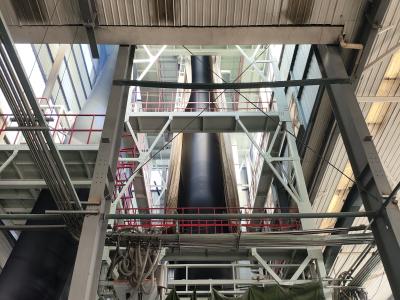
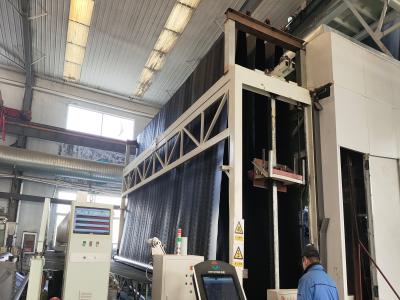
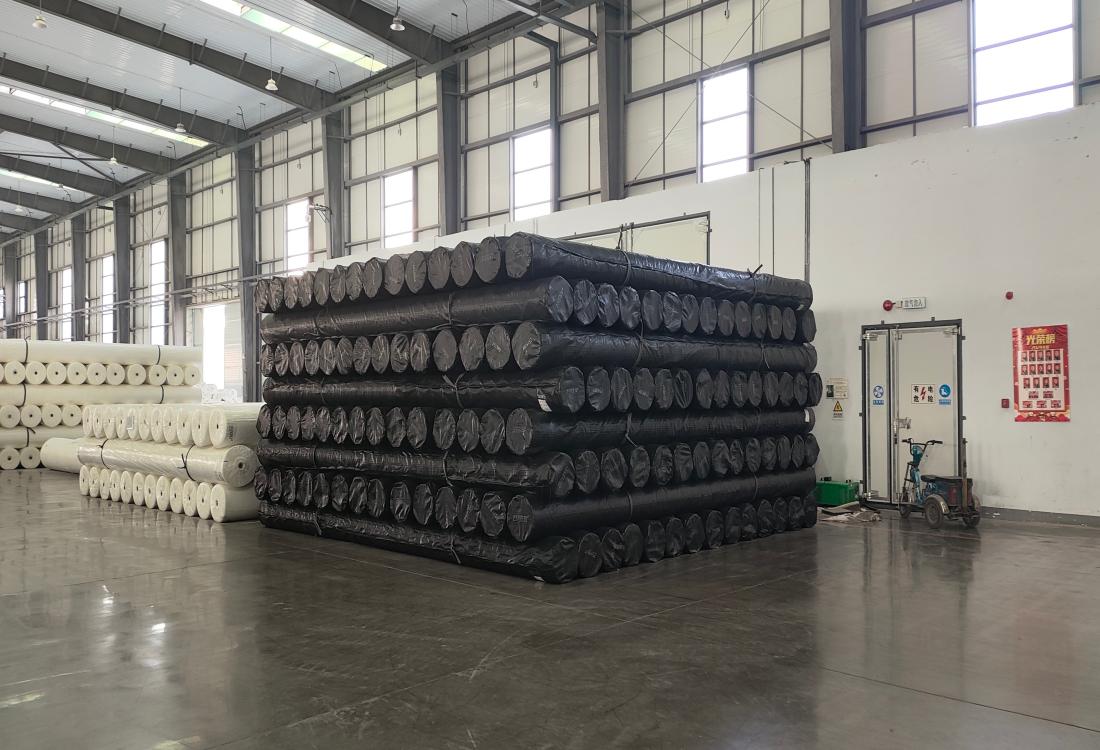
Understanding how Geomembrane Sheet is made helps B2B buyers evaluate quality, verify HDPE Geomembrane certification compliance, and negotiate Harga Geomembran with confidence. The production process follows strict ASTM D5199 and GRI-GM 13 standards—critical for meeting global HDPE Geomembrane certification requirements—starting with mixing virgin HDPE resin and additives to improve durability. This mixture is melted and formed into 0.5–3.0 mm thick sheets using blown film or flat die extrusion, then cooled, cut to 4–10 meter widths, and rolled into 100-meter coils. Optional embossing or nitrogen texturing can be added to improve slope stability, a key consideration for Geomembrane Sheet installation in uneven industrial sites. Strict quality control measures—including thickness checks (±5% tolerance), tensile strength testing, and chemical resistance validation—ensure consistency across every roll. Producing high-quality Geomembrane Sheet requires advanced extrusion equipment, which affects Harga Geomembran, as certified manufacturers provide reliable HDPE Geomembrane that reduces project risks for B2B buyers.
Trend Analysis: Geomembrane Sheet’s Future for B2B Buyers
Emerging trends in Geomembrane Sheet and HDPE Geomembrane are changing B2B procurement strategies. First, circular economy goals are driving the development of recyclable Geomembrane Sheet, which uses post-consumer plastic to reduce carbon footprints—a factor that is becoming more important for sustainability-focused buyers. Second, digital integration, such as IoT sensors built into Geomembrane Sheet, allows for real-time leakage monitoring, reducing liability for B2B buyers managing hazardous waste projects and complementing proper Geomembrane Sheet installation. Third, regional supply chain expansion is stabilizing Harga Geomembran, as manufacturers set up facilities across Asia-Pacific and Europe to shorten shipping times. Key risks for buyers include HDPE resin price changes (10-15% annual fluctuation linked to global oil markets) and gaps in HDPE Geomembrane certification compliance. To address these risks, B2B buyers should work with suppliers that offer multi-certified Geomembrane Sheet and long-term pricing agreements to get competitive Harga Geomembran.
FAQ: Geomembrane Sheet & HDPE Buyer’s Key Questions
1. How does HDPE Geomembrane compare to other Geomembrane Sheet variants?
Compared to other Geomembrane Sheet types like LDPE and PVC, HDPE Geomembrane performs better in chemical resistance (working well across a pH range of 2–12), tensile strength, and overall service life. Unlike PVC, it does not contain leachable plasticizers, helping B2B buyers meet strict environmental standards for their projects. While HDPE Geomembrane has a higher initial cost than LDPE, its 20+ year service life reduces total ownership costs—making it a more cost-effective option for industrial buyers. Its strong UV stability also prevents early degradation, which is a key advantage over basic Geomembrane Sheet options.
2. What factors determine Harga Geomembran for bulk B2B orders?
Several factors influence Harga Geomembran for bulk B2B orders, starting with raw material costs—HDPE resin prices are tied to global oil market changes. Sheet thickness and width also affect pricing, with thicker, wider rolls costing more. Manufacturing standards also play a role; meeting strict benchmarks like ASTM and EPA regulations increases production costs. Value-added treatments, such as UV stabilization and texturing, also raise Harga Geomembran. Regional production costs cause large differences: Asia-Pacific suppliers offer lower Harga Geomembran due to reduced labor and operational costs, while European and North American manufacturers charge more for certified HDPE Geomembrane. Bulk orders often get discounted Harga Geomembran, though customization (e.g., specific thicknesses or textures) may slightly increase the cost of tailored Geomembrane Sheet solutions.
3. What regulatory certifications matter for Geomembrane Sheet procurement?
B2B buyers must prioritize Geomembrane Sheet with region-specific certifications to avoid project delays and fines, as valid HDPE Geomembrane certification is a prerequisite for most industrial projects. Key certifications include ASTM D5199 for North American markets, CE for the EU, ISO 9001 for global compliance, and GB/T 17643-2011 for China—all critical components of comprehensive HDPE Geomembrane certification. The EU’s 2027 requirement mandates 100% leak-proof Geomembrane Sheet for hazardous waste sites, while California will ban non-recyclable variants after 2025—non-compliance can lead to fines of $50,000 or more per project. Working with suppliers that offer NAGI-certified HDPE Geomembrane ensures regulatory compliance, giving international B2B buyers peace of mind and avoiding costly project disruptions, even when paired with professional Geomembrane Sheet installation.
4. How to optimize Geomembrane Sheet installation for industrial projects?
Proper Geomembrane Sheet installation is crucial to maximizing performance, so B2B buyers should ensure their teams or contractors follow best practices—many of which are aligned with HDPE Geomembrane certification standards. Begin with subgrade preparation: remove sharp debris, level the surface, and compact the soil to prevent punctures. For HDPE Geomembrane, seams need a 10–15 cm overlap and should be welded using hot wedge or extrusion techniques to eliminate leakage—the main cause of Geomembrane Sheet failure. Textured variants improve slope stability, while limiting UV exposure during installation preserves the material’s integrity. After installation, air pressure or vacuum testing should be done to verify seam quality, ensuring long-term reliability for B2B industrial projects and maintaining compliance with HDPE Geomembrane certification requirements.

Call to Action: Partner for Premium Geomembrane Sheet Solutions
For B2B buyers looking for high-quality Geomembrane Sheet and HDPE Geomembrane, we provide certified, patent-backed solutions that meet global HDPE Geomembrane certification standards. Our regional manufacturing facilities enable competitive Harga Geomembran and stable supply chains, while our technical team offers customized support for waste management, water conservation, mining applications, and professional Geomembrane Sheet installation guidance. Whether you need bulk HDPE Geomembrane or tailored Geomembrane Sheet solutions, contact us today to get a detailed quote, compliance certification package, and installation guidance—let us be your trusted partner for improving industrial containment projects.