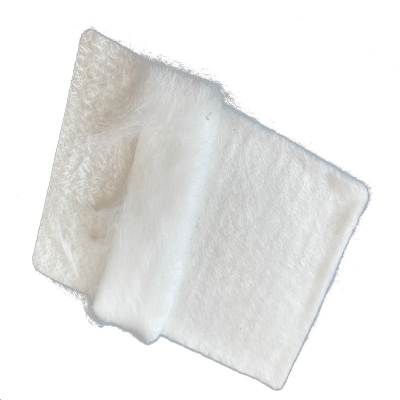
Dam Liners: Engineering Impermeable Barriers for Global Water Security and Environmental Protection
In 2024, an international research team published findings from an 11-year study of an HDPE geomembrane exhumed from a gold mining tailings dam in Brazil . The results were striking: despite significant antioxidant depletion suggesting the material was approaching its residual stage, the dam liner showed only a 0.4% probability of nominal failure in tensile strength, and no significant environmental contamination was detected in the surrounding area . This rare longitudinal study, published in Applied Sciences, provides empirical evidence for what engineers have long suspected—properly specified and installed dam liners can deliver reliable performance for decades, directly supporting multiple Sustainable Development Goals related to clean water and responsible consumption .
For procurement professionals, civil engineers, and infrastructure developers worldwide, this research underscores a fundamental truth: dam liners are not merely commodity products but engineered systems whose selection demands rigorous attention to material science, site-specific conditions, and long-term performance data.
 |  |  |
Market Context: The Growing Imperative for Secure Water Containment
The global geomembrane market, valued at approximately USD 2.3 billion in 2025, is projected to grow at a compound annual rate of 5.4-7.5% through the early 2030s . Within this landscape, dam liners represent a critical and growing segment, driven by three converging pressures: accelerating water scarcity, aging infrastructure replacement needs, and increasingly stringent environmental regulations.
The Asia-Pacific region leads global consumption, fueled by massive investments in water infrastructure across China and India . China's ongoing water conservation initiatives under the 14th Five-Year Plan have particularly stimulated demand for high-quality HDPE liner sheet products, with thickness specifications typically ranging from 1.0mm to 2.0mm for reservoir applications . Meanwhile, African markets show robust growth as agricultural development and mining projects drive adoption—a 2026 Kenyan irrigation project using HDPE liners reportedly saved USD 28,000 in water conservation compared to unlined alternatives .
Dam liner price considerations vary significantly across regions and specifications. Standard HDPE geomembranes typically range from USD 0.40 to USD 2.50 per square foot, with 1.5mm thickness—a common specification for agricultural reservoirs—priced between USD 1.00 and USD 1.50 per square foot . However, experienced buyers recognize that dam liner price represents only one component of total project cost, with installation, site preparation, and long-term performance factoring critically into lifecycle economics .
Technical Foundations: Material Science and Manufacturing Precision
Material Selection and Properties
Modern dam liners are predominantly manufactured from high-density polyethylene (HDPE), valued for its exceptional chemical resistance, UV stability, and mechanical strength . The material's density typically exceeds 0.94 g/cm³, with permeability coefficients as low as 1×10⁻¹⁴ cm/s—effectively impermeable to fluid migration . Carbon black content of 2-3% provides UV protection, while antioxidants and stabilizers extend service life to 70+ years under proper conditions .
Linear low-density polyethylene (LLDPE) offers an alternative where greater flexibility is required, such as irregular terrain or applications subject to ground settlement . LLDPE liners typically cost USD 0.50-2.00 per square foot with service lives of 20-50 years . PVC remains an economical option for smaller projects at USD 0.30-1.50 per square foot, though with reduced longevity of 10-15 years .
Manufacturing Excellence
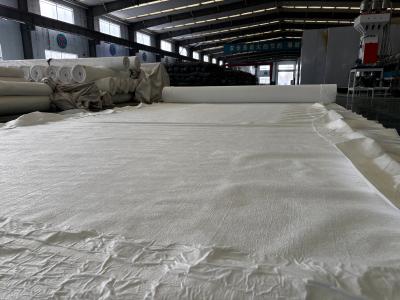
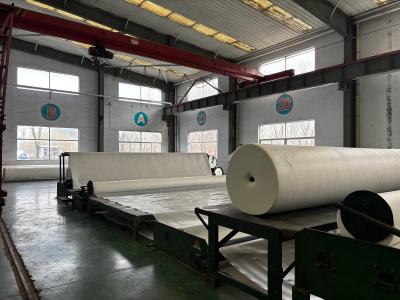
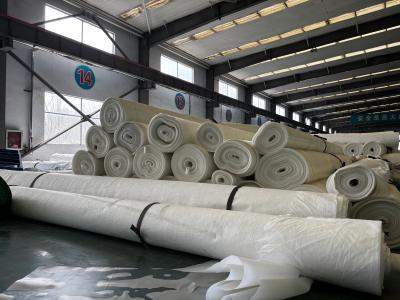
The production of high-quality HDPE liner sheet involves precisely controlled processes :
1.Raw Material Selection: 100% virgin HDPE resin from certified sources (e.g., Sinopec, Sabic, ExxonMobil) is blended with carbon black, antioxidants, and stabilizers .
2.Extrusion: Pellets are melted and extruded through a flat die at controlled temperatures to ensure stable molecular structure .
3.Calendering and Cooling: The sheet passes through rollers to achieve specified thickness (typically 0.3-3.0mm) and surface finish .
4.Texturing (Optional): For slope applications requiring enhanced friction, embossing rollers create textured surfaces .
5.Quality Control: Each roll undergoes testing for thickness, density, tensile strength, elongation, and puncture resistance per ASTM and GRI-GM13 standards .
Critical Research Insights: Material Selection for Dam Core Walls
A 2025 study published in the Journal of Hydroelectric Engineering by researchers from Hohai University and PowerChina examined the mechanical behavior of geomembranes for seepage control in core-wall rockfill dams . The research compared HDPE, LLDPE, and PVC under both uniaxial and multiaxial tensile testing—crucial because conventional uniaxial tests poorly model the multidirectional stress state that dominates actual operating conditions .
The findings carry significant implications for dam liner specification:
1.Traditional uniaxial tests overestimate deformability—HDPE and LLDPE yield strains under multiaxial tension (1.6-2.4%) were significantly lower than under uniaxial tension (13%)
2.PVC exhibited no distinct yield point and demonstrated ultimate tensile strains (92.8-112.4%) far exceeding PE variants (by 34.4-50.0%)
3.When evaluated using elastic-stage strain energy density, PVC showed the highest deformation accommodation capacity under multiaxial loading, substantially greater than both PE variants
The researchers concluded that elastic strain energy density derived from multiaxial tensile tests can serve as a reliable criterion for assessing deformation performance of seepage-control dam liners .
Industry Trends Reshaping the Dam Liner Market
Sustainability and Circular Economy
Environmental considerations increasingly influence both product development and procurement decisions. The Brazilian mining study demonstrated that properly functioning dam liners contribute directly to SDG targets by preventing contamination—the 11-year-old exhumed geomembrane showed no evidence of significant environmental impact in the surrounding area .
Manufacturers are responding with recycled-content options. Recycled HDPE prices have risen approximately 12% annually as demand grows, while mixed-material formulations aim to maintain performance standards . For buyers pursuing green certifications or subject to environmental procurement policies, specifying liners with documented lifecycle assessments provides measurable sustainability contributions.
Performance-Based Specification
The industry continues moving away from specification based solely on thickness toward performance-based criteria reflecting actual service conditions. The Brazilian study's use of non-parametric statistics (Kernel Density Estimator) for durability analysis represents a methodological advance that could add reliability to decision-making for geosynthetic projects .
Digital Integration and Traceability
Progressive manufacturers now offer QR code tracking linking each roll to production data, Mill Test Reports, and installation documentation . This traceability proves invaluable for large-scale projects with stringent quality assurance requirements and for verifying compliance with international standards.
Innovative Configurations
Emerging technologies include sensor-injected liners that reduce inspection times by half, and nano-additives that increase resistance by 20% . These innovations address longstanding challenges in monitoring liner integrity over decades of service.
Strategic Procurement: A Framework for Informed Decision-Making
For international buyers navigating dam liner sourcing, several factors warrant careful consideration.
Certification and Compliance
Verify that products carry certification to relevant international standards—ASTM, ISO, GRI-GM13, or GB/T as appropriate for your region . For regulated applications such as mining tailings or potable water containment, specific certifications may be mandatory. The Mongolian agricultural reservoir project, for example, specified GM13-standard geomembrane with SGS certification to ensure quality .
Site-Specific Engineering
The Hohai University research underscores that material selection must account for site-specific stress conditions . A dam liner appropriate for a flat irrigation pond may prove unsuitable for a steep slope application requiring enhanced deformation capacity. Engage suppliers who employ engineers capable of reviewing project-specific conditions and recommending appropriate specifications.
Total Cost Analysis
Look beyond unit dam liner price to assess total project cost, including installation efficiency, long-term performance, and potential failure costs. Kenyan irrigation specialists report that amateur installation voids most manufacturer warranties and that professional installation adds KES 50-100 per square meter but prevents catastrophic failures costing 3-5 times more in repairs .
Thickness Selection Guidelines
Experience-based guidelines suggest :
1.0.5-1.0mm: Ponds, canals, aquaculture
2.1.0-1.5mm: Reservoirs, agricultural dams, industrial tanks
3.2.0-3.0mm: Landfills, mining heap leach pads, tailings facilities
Supply Chain Reliability
For international procurement, evaluate supplier experience with export documentation, container optimization, and customs compliance. The Mozambique dam project case illustrates how responsive communication, accurate quantity calculations, and comprehensive documentation (product catalogs, case studies, test reports, Bill of Lading) secured customer confidence and order closure .

Frequently Asked Questions
Q1: What is the expected service life of HDPE dam liners, and how is this determined?
High-quality HDPE dam liners manufactured from virgin resin with appropriate additives typically achieve service lives of 40-100 years under proper conditions . The Brazilian 11-year exhumation study provides empirical validation, showing that despite significant antioxidant depletion suggesting proximity to residual stages, the geomembrane approached nominal failure based on stress crack resistance but did not rupture, and environmental analysis indicated no significant contamination . Long-term performance depends on UV exposure, chemical contact, installation quality, and mechanical stresses.
Q2: How do I select between HDPE, LLDPE, and PVC for my specific application?
Selection should be based on application requirements :
1.HDPE: Preferred for large-scale reservoirs, mining, and applications requiring maximum chemical resistance and longevity. Offers best UV stability and mechanical strength.
2.LLDPE: Choose for irregular terrain, areas subject to settlement, or where greater flexibility is needed. Superior puncture resistance and adaptability.
3.PVC: Consider for budget-limited small projects, temporary installations, or where ease of repair is prioritized. Not recommended for long-term exposed applications.
The Hohai University research adds important nuance: for applications subject to multiaxial stress (such as core-wall rockfill dams), PVC may offer superior deformation accommodation capacity as measured by elastic strain energy density .
Q3: What factors most significantly affect dam liner price?
Dam liner price is influenced by several key variables :
1.Material type: HDPE (USD 0.40-2.50/ft²), LLDPE (USD 0.50-2.00/ft²), PVC (USD 0.30-1.50/ft²)
2.Thickness: 1.5mm HDPE typically USD 1.00-1.50/ft²
3.Project scale: Larger volumes receive discounted pricing—100,000m² projects may achieve USD 0.80/ft²
4.Raw material quality: Virgin resin commands premium over recycled blends
5.Additives: UV stabilizers, antioxidants, and texturing increase cost
6.Installation: Professional installation adds USD 0.20-2.00/ft²
7.Logistics: Shipping adds USD 0.05-0.20/ft² depending on distance
Q4: How do I verify that delivered dam liners meet specified quality standards?
Implement a verification protocol including :
1.Request Mill Test Reports for each production lot and compare against specification requirements
2.Verify third-party certifications (SGS, Intertek, TUV) where specified
3.Conduct visual inspection for consistent appearance, absence of damage, proper labeling
4.For critical projects, consider independent laboratory testing of samples from delivered rolls
5.Confirm traceability documentation linking rolls to production data
The Mozambique project success was attributed to comprehensive documentation including technical data, test reports, and reference materials .
Q5: What does recent research indicate about geomembrane performance in dam applications?
The 2025 Hohai University study provides critical insights for core-wall rockfill dam applications :
1.Uniaxial tensile tests significantly overestimate deformability—multiaxial testing is essential for accurate assessment
2.HDPE and LLDPE show yield strains of only 1.6-2.4% under multiaxial tension, versus 13% under uniaxial
3.PVC exhibits no distinct yield point and achieves ultimate strains of 92.8-112.4%, far exceeding PE variants
4.Elastic strain energy density from multiaxial tests offers reliable criterion for deformation performance assessment
The Brazilian mining study demonstrates that properly specified HDPE geomembranes can maintain functionality for 11+ years with minimal failure probability, supporting SDG targets .
A Research-Based Approach to Dam Liner Specification
The gap between laboratory certification and field performance has been documented repeatedly—in peer-reviewed journals, in conference proceedings, and in project post-mortems. The 11-year Brazilian exhumation study and the Hohai University multiaxial testing research both underscore that responsible specification requires looking beyond standard data sheets to application-specific evidence .
The most reliable suppliers differentiate themselves not through lowest dam liner price, but through documented performance in conditions similar to your project. They employ engineers who can review site conditions and recommend appropriate HDPE liner sheet specifications based on published research and verified case studies. They maintain relationships with independent testing laboratories and make that data available to buyers.
Before you finalize specifications for your next water containment or environmental protection project, consider a different approach. Share your project's geotechnical data and application requirements with our technical team. We will provide a no-obligation analysis referencing relevant research and comparable installations, recommending appropriate dam liner specifications with documented performance in conditions similar to yours. Let our engineers help you specify with confidence, reducing risk and ensuring long-term project performance.